
Oklahoma Auditor & Inspector Cindy Byrd CPA, on the FY 2023 Federal Single Audit
The U.S. national debt is $39 trillion – more than double what it was around 2015 when Oklahoma’s Dr. Tom Coburn sounded warnings at $18 trillion. The Federal government is clawing money back from states for mismanagement, waste and abuse of funds so how much is Oklahoma at risk in “questioned costs?”

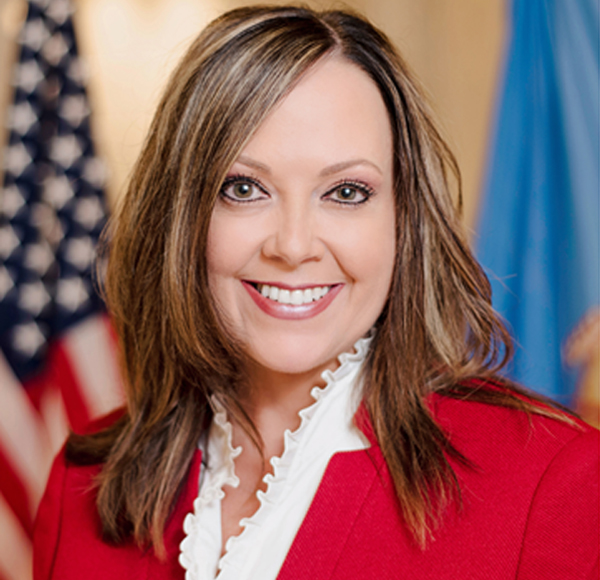
Oklahoma Auditor Cindy Byrd, speaking January 8th in Tulsa, declared there is a widespread pattern of financial mismanagement and lack of oversight plaguing Oklahoma, leading to an unprecedented $93.4 million in “questioned costs” in fiscal year 2023 alone in the recently completed “Federal Single Audit” which reveals problems at the state Office of Management and Enterprise Services (OMES) and Department of Human Services (DHS).
Byrd believes it is not malfeasance as much as misfeasance. Sometimes criminal but often incompetence of those operating without the knowledge to execute their elected or appointed responsibilities. Basic financial skills are missing.
This systemic failure is most evident in the state’s education and social service sectors, where billions in federal funds have been squandered through mismanaged programs, potential fraud, and a stark failure to deliver intended outcomes for vulnerable citizens. These state-level issues reflect a broader national challenge, underscoring the urgent need for fiscal accountability at all levels of government.

- Audits of federal spending in Oklahoma since 2020 have reviewed $44.7 billion, revealing a massive spike in “questioned costs” which totaled an “unprecedented” $93.4 million in fiscal year 2023.
- This is a dramatic increase from the state’s typical pre-pandemic average of $28.4 million in questioned costs per year.
- The U.S. Treasury has already directed Oklahoma to repay $28.4 million from fiscal year 2021, a demand directly tied to a $15.7 million “unallowable management fee” collected by a nonprofit then administering emergency rental assistance funds.
- The OK Department of Human Services (DHS) was the largest contributor to these issues, accounting for $63.6 million of the total costs questioned, primarily from mismanaged childcare funds.

Gross mismanagement within Oklahoma’s childcare grant programs resulted in tens of millions in wasted spending with negligible benefits for families.
- Out of $791 million in Federal Child Care Development Grant funds received since March 2020, DHS spent $43 million on a “Child Care Desert Program” that ultimately saw a net decrease of 14 childcare facilities and only a 2% capacity increase in the 34 targeted counties.
- Oversight was severely lacking, with just four DHS officials deciding how funds were spent and 75% of tested expenditures from the Desert Grant Program being questioned.
- In one egregious case, “Applicant 1” received a $2 million grant based on a flawed capacity of 283 children but served only 10-12 students daily. The company’s founders pocketed over $815,000, and 93% of the program’s spending was on unallowed payroll and administrative costs.
- Other misuses of childcare funds included lavish home remodels costing $30,000-$40,000, and one recipient using $20,000 to pay off a Cadillac.
Systemic failures in Oklahoma’s education sector reveal a pattern of misappropriated funds and poor student outcomes.
- The founders of Epic Charter Schools allegedly siphoned $214 million in taxpayer dollars and now face 15 felony counts, including racketeering and embezzlement.
- Tulsa Public Schools spent an estimated $35-75 million on DEI initiatives while only 7% of its students were testing at grade level.
- Mismanagement extended to other educational funds, with $1.8 million intended for school supplies being used for personal items like TVs and grills, and another $6.5 million in tuition assistance being denied to qualifying families due to preferential access given to certain schools.

Byrd warns that federal agencies can require Oklahoma taxpayers to repay every dollar. She emphasizes the limited enforcement powers of her office, the need for citizens to pressure legislators, and calls for 2026 to be the year Oklahoma “puts its financial house in order.”
She argues that America’s debt problem will not be solved “from the top down” in Washington. Instead, billions of federal dollars flow through states every year, making state-level management and oversight crucial.
In Oklahoma, federal spending “doubled overnight” with COVID, from about $7 billion per year to roughly $14 billion. Since 2020, the Auditor’s office has audited more than $44.7 billion in federal dollars spent in Oklahoma. It is likely when (not if) the Federal government requires “questioned costs” be repaid, it will cause significant disruption in state services.
The State Auditor’s office is a reporting agency, not an enforcement body. Its mission is to provide transparency so taxpayers can see how their money is used and provide financial guidance and concrete action items so agencies can protect public assets. It has no authority to prosecute or compel agencies to change; other elected officials must take enforcement actions. The Auditor notes that “our advice is often ignored.”

As a writer covering public policy, I am often stunned by those that expect the Auditor to “perp-walk” people. The office cannot arrest, but they can warn and Auditor Byrd has done so repeatedly. The “Federal Single Audit” release headline said, “It is past time for Oklahoma to get its financial house in order.”
“Every taxpayer in Oklahoma needs to understand what this means,” said Auditor Byrd. “If this mismanagement continues, our federal taxes will go up, our state taxes will go up, and government services will plummet. The federal government can, and most likely will, demand millions of dollars back from the State of Oklahoma,” Auditor Byrd added.
Again, while not the billions suspected in Minnesota’s Somali fraud, OMES mismanaged more than $21 million earmarked to provide rental assistance to Oklahomans during the pandemic. As a result, an estimated 7,659 Oklahomans could have received rental assistance but were denied. DHS failed to put proper guardrails on expenditures for more than $63.6 Million in federal grant money. This was for programs intended to expand childcare access, and welfare benefits.
The full FY 2023 Federal Single Audit is now posted here on the Oklahoma State Auditor & Inspector’s official website here.
“For the last three years, I have been sounding the alarm that Oklahoma state government is mired in a culture of financial mismanagement,” Auditor Byrd said. “Over the last three years, the problems have gotten progressively worse. The amount of money Oklahomans could be forced to repay to the federal government is concerning.”
Regular readers of this writer on Substack know that Auditor Cindy Byrd is an announced candidate for Oklahoma Lt. Governor as was covered July 15, 2025, but at the recent meeting, that race was mentioned by others but not by Auditor Byrd.

About the author: David Arnett’s beginning in print journalism was not planned in 1985 but covered by Rebecca Martin writing for the Columbia Journalism Review in 1987. After 11 years in print, he established TulsaToday online in 1996 and Straight Up on Substack in 2022 providing both free and paid email subscriptions to the latest news and opinion. This story was first published on Substack January 14.
Thank you for reading. Your comments are welcome below and/or by email.