
Critics often note voter turnout in Oklahoma elections is lower than in most states, yet those critics seldom demand the reform that would do the most to boost election participation: moving more elections to the November ballot.
Oklahomans know when gubernatorial and presidential elections are scheduled, but many do not know when school-board elections occur. That’s by design. Holding school-board elections on obscure winter or spring dates guarantees low turnout and allows a very small group—typically, those directly employed by a school district—to have outsized sway.
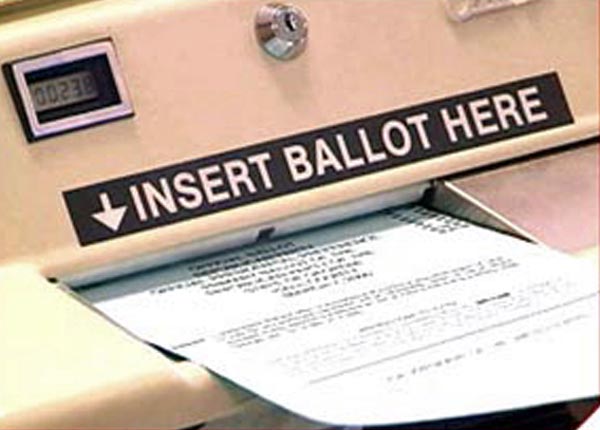
Currently, school-board primary elections are held the second Tuesday in February every year, unless there is a presidential election, while school-board general elections are conducted the first Tuesday of every April.
There are approximately 2,500 school-board members elected statewide in very low-turnout races. That doesn’t produce quality oversight. At times, this problem reaches the point of self-parody.
Consider this: An open school board seat in the Crutcho school district drew no candidates in December 2024. That is among the most extreme examples, but there are plenty of others.
Americans for Prosperity found that turnout for the April 2, 2024, school-board elections in Oklahoma averaged 6 percent of voters. In comparison, 64 percent participated in the November 2024 general election.
Yet we are told that moving school-board elections to November will somehow harm the system. That’s nonsense.
Fortunately, Senate Bill 6, by state Sen. Ally Seifried and state Rep. Chris Banning, would move school-board elections to August for primaries or November for runoffs.
During the 2025 legislative session, SB 6 passed out of the Oklahoma Senate on a 33-10 vote and then passed out of two state House committees, but it did not receive a vote on the floor of the Oklahoma House of Representatives. The bill remains eligible for a House floor vote in the 2026 session.
A similar measure has been filed by state Sen. Dusty Deevers. His Senate Bill 538 would require bond-and-tax proposals for both cities and school districts to be placed on the November general-election ballot. The bill passed out of the Senate General Government Committee during the 2025 session, but it did not receive a floor vote in the Senate.
Lawmakers began addressing this issue in 2025 with the passage of Senate Bill 652, which consolidated Oklahoma’s election dates into five standard election days each year, held in February, April, June, August and November. Previously, Oklahoma law allowed for up to 12 possible election dates in odd-numbered years and up to seven in even-numbered years.
But there is still room for further improvement. For those concerned about voter turnout and civic participation in local elections, there is no better way to address this problem than to simply move elections to high-turnout dates.
Jonathan Small serves as president of the Oklahoma Council of Public Affairs.