
A white-tailed deer in southwestern Arkansas within four miles of the Oklahoma border has tested positive for chronic wasting disease (CWD). Although not inside of Oklahoma borders, due to the proximity, the Oklahoma Department of Wildlife Conservation (ODWC) announced late this afternoon that it has activated the next stage of the CWD Response Plan jointly produced with the Oklahoma Department of Agriculture, Food and Forestry.
“With the ability of deer to easily travel many miles in a day, the CWD Response Plan dictates that we respond to this finding as if it were found in Oklahoma” said Joey McAllister, Wildlife Programs Supervisor with ODWC. “We will be working through our response plan, and our ultimate goal is to ensure healthy and well-managed deer with as little impact to either the resource or our constituents as possible.”
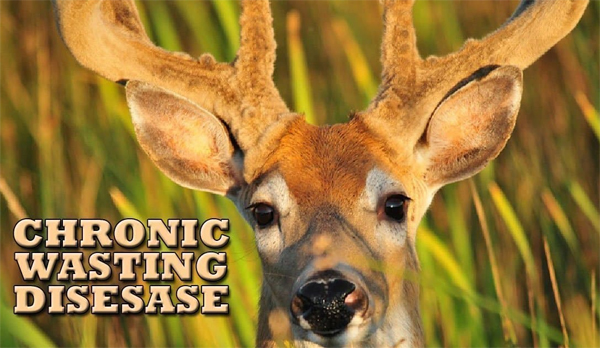
CWD is an always-fatal neurological disease that affects the brains of deer, elk, moose, and other members of the cervid family, creating holes resembling those in sponges. CWD transmission from wild animals to people or to livestock has never been documented. Oklahoma’s first case of a wild deer infected with CWD was confirmed in June 2023 in Texas County, in the Oklahoma Panhandle.
The Wildlife Department has conducted CWD monitoring on hunter-harvested deer and elk, and road-killed deer, since 1999. Chronic wasting disease, sometimes called zombie deer disease, is a transmissible spongiform encephalopathy naturally affecting members of the deer family. TSEs are a family of diseases caused by misfolded proteins called prions and include similar diseases such as mad cow disease in cattle, Creutzfeldt–Jakob disease in humans, and scrapie in sheep. In the United States, CWD affects mule deer, white-tailed deer, red deer, sika deer, elk, antelope, caribou, and moose.

ODWC staff will continue monitoring for evidence of CWD within Oklahoma’s borders and will release additional information, including ways deer and elk hunters can help with detection and mitigation. Additional guidelines or management plans will be distributed and well-advertised if determined necessary to further protect Oklahoma’s deer and elk populations.
Additional human health information relating to CWD is available at https://www.usgs.gov/centers/nwhc/publications. For more information on the disease, hunting regulations, and proper disposal of infected animals, go to https://www.wildlifedepartment.com/hunting/resources/deer/cwd.