
The Hern for Senate campaign released the following statement after Oklahoma Attorney General Gentner Drummond issued his opinion regarding the transition of Oklahoma’s open U.S. Senate seat, declaring that Oklahoma law establishes a clear timeline for the vacancy created by Markwayne Mullin’s departure to be filled by the elected successor.
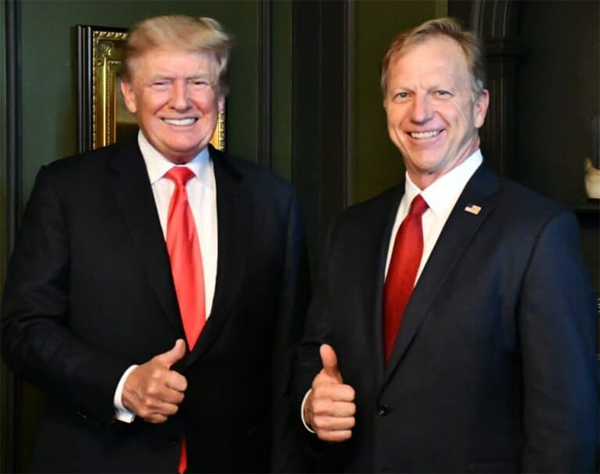
“We appreciate the Attorney General’s review and are pleased that his opinion confirms our understanding of Oklahoma law: the winner of the U.S. Senate election in November is eligible to assume office immediately upon certification by the State Election Board. In addition, the opinion confirms that the Governor’s appointment ends when a successor is elected. This is consistent with the clear language of the statute and ensures Oklahoma will have an elected voice in the Senate without delay.
“Kevin Hern remains focused on his campaign, traveling the state and meeting with voters ahead of Election Day. If elected, he looks forward to getting to work on day one and delivering the results Oklahomans deserve,” the statement concluded.
The summary from Attorney General Gentner Drummond follows:
The candidate elected on November 3, 2026, is deemed elected to fill the vacancy created by
Senator Mullin’s resignation and may assume the office once the State Election Board certifies the
election. The Governor’s appointment ends when that successor takes the oath before the Senate,
not on January 3, 2027. The Governor has no discretion to decline or delay certifying the election.
Because the candidate is elected to two terms, the Governor must transmit two certificates: one for
the unexpired term ending January 3, 2027, and one for the six-year term beginning that same day.
The third paragraph of title 26, section 12-101(C) of the Oklahoma Statutes controls. When “the
vacant office is already scheduled to be filled for a full term at the next available regularly
scheduled election,” no special election is called. The candidate elected “shall be deemed to also
have been elected to fill the vacancy and shall be eligible to assume the office upon the official
certification of the election by the State Election Board.” The seat Senator Mullin held was already
scheduled to be filled for a full term on November 3, 2026.
Subsection C, paragraph 2 does not change that result. It fixes the timing of a special election when
one is required; paragraph 3 dispenses with the special election when the office is already on the
ballot. Reading paragraph 2 to push this vacancy to a 2028 special election, for a term that expires
in January 2027, would require an election to fill a term that no longer exists. It would reverse a
rule in place since 1994 under which a Senate vacancy arising in the final year of a term is filled
by the winner of that year’s General Election.
Section 10(C) of title 51 of the Oklahoma Statutes directs that the appointee serve “until a
successor is elected.” Section 15 does not extend that tenure. Section 10(C) is the specific and later
enactment, and the Seventeenth Amendment itself allows temporary appointments only “until the
people fill the vacancies by election as the legislature may direct.” Federal law does not interfere.
2 U.S.C. § 1 fixes the term to which a regular election elects a Senator. Still, the Seventeenth
Amendment leaves the manner of filling a vacancy to the State, and the States have long filled
Senate vacancies at elections held with the regular election. In short, the questions reduce to two:
whether the November 3 election fills the vacancy, and when the appointment ends. It does, and
the appointment ends when the successor takes the oath.
The Attorney General’s full opinion can be read here.