Category Archives: Science

Severe storms imminent after unusually slow start

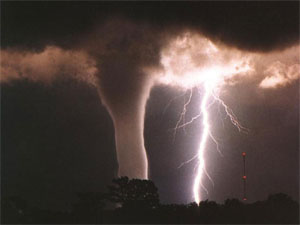
TornadoAccuWeather is reporting today that due to the continuous onset of cold, drier air that’s been keeping southern moisture at bay, the month of March has seen no severe thunderstorm watches issued by the National Atmospheric and Oceanic Administration’s Storm Prediction Center, something that has never happened in the center’s 45-year history.

“We are in uncharted territory with respect to lack of severe weather,” SPC’s Warning Coordination Meteorologist Greg Carbin said in a March 17 press release. “This has never happened in the record of SPC watches dating back to 1970.”


Continue reading

SMU seismologists find old fault

Earthquake1CBSDFW.COM is reporting a new/old suspected cause for recent earthquakes in the area. Contrary to the anti-energy leftist claims of blame; seismologists have identified a fault line 2 miles long and 3 to 5 miles deep that runs through Irving and into Dallas, Texas.

“This is not new faulting. This is not the formation of a new fault this is just reactivation of a fault that’s probably hundreds of millions of years old,” explains SMU Seismologist Heather DeShon.

Continue reading

British legalize three parent babies

BabyDNAThe British Parliament has  voted to legalize creation [manipulation] of babies using DNA from three different people. The legislation – which was passed by a margin of 254 votes – allows the use of a technique called “mitochondrial donation.” They are the first national government to do so.

To supporters, it means women will be able to have children without passing on serious and incurable diseases of the mitochondria.

Opponents questioned the technique’s safety and warned it could lead to “designer” babies according to Sky News.

Continue reading

NASA’s best ever view of dwarf planet

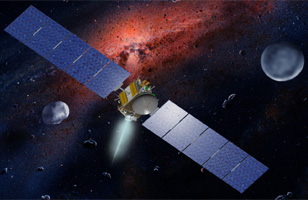
NASA Artist illustration of Dawn Spacecraft

NASA Artist illustration of Dawn Spacecraft

The Dawn spacecraft has returned the sharpest images ever seen of the dwarf planet Ceres. The images were taken 147,000 miles (237,000 kilometers) from Ceres on Jan. 25, and represent a new milestone for a spacecraft that soon will become the first human-made probe to visit a dwarf planet.

“We know so little about our vast solar system, but thanks to economical missions like Dawn, those mysteries are being solved,” said Jim Green, Planetary Science Division Director at NASA Headquarters in Washington.

Continue reading

Mullet Over #649

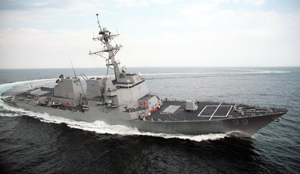
USS Farragut is an Arleigh Burke-class destroyer in the US Navy. She is the fifth Navy ship named for Admiral David Farragut (1801–1870).

USS Farragut is an Arleigh Burke-class destroyer in the US Navy – the fifth Navy ship named for Admiral David Farragut (1801–1870).

In July of 1862, David Glasgow Farragut was promoted to the rank of rear admiral. He was the first admiral of any sort in the U.S. Navy. In 1866, he became the first naval officer to attain the rank of full admiral. He died at age 69 (1870) subsequent to having served 60 years in the navy. Farragut had enlisted at age 9 as a midshipman.

Interpreting dating jargon: “I think that we should start seeing other people” means “I already am.”
Continue reading