
Analysis: Oklahoma’s limited-government ethos, where every new state mandate should raise red flags, Rep. John Pfeiffer (R-Orlando) has delivered a masterclass in regulatory creep. His HB 2166, now signed into law by Gov. Kevin Stitt, doesn’t slash taxes, slash bureaucracy, or slash the size of government. It does the opposite: It rewrites state law to create two official classes of “legal newspapers” qualified to publish the flood of government-mandated public notices that counties, cities, and local entities must run. The result? A fresh layer of state-defined checklists, audits, court petitions, and content quotas that protects the print newspaper industry’s cozy, taxpayer-funded revenue stream while pretending to “modernize” transparency.
This isn’t deregulation. It’s the print paper lobby – led by the Oklahoma Press Association (OPA) – getting exactly what it negotiated for after “years of study and analysis,” as Pfeiffer himself admitted. And Oklahoma taxpayers, already squeezed by local government spending, will foot the bill through higher publishing fees passed on by the very entities required to use these “qualified” outlets.

The Bill’s Fine Print: More Mandates, Not Less Government
Let’s cut through the spin. HB 2166 amends 25 O.S. 2021, Section 106, the cornerstone statute governing where legal notices, everything from county commissioner proceedings and municipal ordinances to bid solicitations, delinquent tax sales, zoning changes, public hearings, and election notices, must appear to have legal force. Under existing law, these notices require a “legal newspaper of the county” with paid circulation, U.S. Postal Service second-class mail status, and 104 weeks of continuous publication.
Pfeiffer’s bill keeps that rigid framework for “Periodical Permit Newspapers” but adds a shiny new “Nonperiodical Permit” category for counties lacking a traditional paper. On paper, it sounds helpful for rural areas. In reality, the new category comes with a bureaucratic gauntlet designed to look like “high standards” while locking out true entrepreneurs:
- Weekly publication with at least 200 paid print subscriptions (delivered by mail or carrier – no nominal fees allowed).
- At least 25% “news content” – defined as local news, events, and government proceedings. Who audits what counts as “news”? The state, of course.
- A physical office open to the public in the county.
- Independent audits verifying circulation and content.
- Petition the district court for approval.
- Annual ownership statements, registration with the Secretary of State, and more filings.
- No government ownership, subsidies, or ties to political parties.
Both classes must post notices online (no paywall), contribute to a statewide notices website run by the newspapers themselves (hello, OPA’s oklahomanotices.com), archive issues for years, and face strict geographic limits. Flexibility for disasters exists, and adjoining counties can step in if needed, but the core mandate remains: Government must pay private print outlets for these notices.
Pfeiffer boasts this “ensures high standards and government transparency” while easing U.S. Postal Service hurdles for startups. But from a Sooner Sentinel lens, it’s pure protectionism dressed in transparency clothing. The state is still in the business of licensing “legitimate” press for its own announcements. That invites cronyism, compliance costs that favor deep-pocketed incumbents, and barriers that crush pure market entrants.
The Print Paper Lobby’s Long Game – And Pfeiffer’s Role
The Oklahoma Press Association isn’t shy about its interests. As the trade group representing roughly 180-200 Oklahoma newspapers, OPA maintains the free (to the public) statewide notices portal, publishes the Legal Notice Digest guiding governments on requirements, and aggressively defends the print mandate. Legal notices are a reliable revenue source: State statute sets minimum rates, currently around 22 cents per word for the first insertion (plus tabular rates up to $1.10 per line) with a $25 floor, paid directly by local governments from taxpayer funds. Recent legislative tweaks have hiked these rates and added readability rules, all while keeping print as the only legally effective method. Online posting is a supplement, never a replacement.
Work on HB 2166 was the “product of years of negotiations” with the industry. Pfeiffer introduced it in February 2026, shepherded it through committees with amendments bearing his name, and saw it enrolled and signed in record time for such a niche bill. His press releases echo OPA talking points verbatim: “high standards,” “government transparency,” “easier for smaller counties.” Yet as a self-described conservative rancher, Marine veteran, and candidate for Labor Commissioner who rails against red tape and fights for “Oklahoma jobs” and “less regulation,” Pfeiffer’s sponsorship is a head-scratcher, or perhaps not, when lobby’s influence is factored in.
Oklahoma’s system has long funneled public dollars into a quasi-cartel. Courts have voided everything from tax measures to elections over technical publication failures. The OPA’s model ensures newspapers get paid whether citizens read the print version or not. In a digital age where every county website and official portal could post notices instantly and for free, this mandate smells like 20th-century industrial policy propping up a struggling sector at public expense.
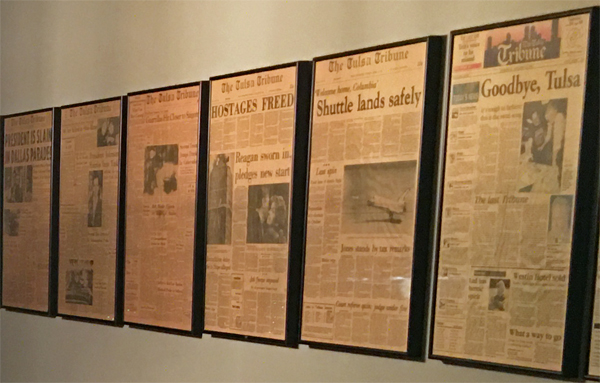
The Limited-Government Alternative Pfeiffer Ignored
True reformers, those prioritizing low taxation and small government, would scrap the entire apparatus. Post everything on official government websites first, with verifiable timestamps, searchable archives, and basic authentication. Let newspapers compete voluntarily on merit: speed, reach, analysis, and value-added reporting. No state licensing. No content quotas. No mandatory audits or physical-office rules. No Secretary of State filings deciding who gets the guaranteed revenue stream.
Public notices exist for accountability, not to subsidize any industry model. HB 2166 piles on: subscription minimums, news-content mandates, court petitions, and statewide portal requirements. It loosens the postal monopoly slightly but tightens the state monopoly on defining legitimate press. Costs flow to taxpayers via inflated local budgets or reduced competition. Rural counties struggling for outlets? Free markets and technology, not new statutes, solve that.
Pfeiffer and the print lobby frame this as “incremental progress”. Sooner Sentinel readers know better: Incremental regulation is still regulation. Oklahoma thrives when government exits the referee chair and lets markets, locals, and innovation decide. This bill doesn’t get there. It redefines the “way” with fresh checklists instead of slashing mandates altogether.
Bottom Line: Time to Demand Real Reform
Rep. John Pfeiffer’s HB 2166 is a textbook case of special-interest capture masquerading as good governance. It entrenches the print newspaper lobby’s preferred business model, adds bureaucratic hurdles under the guise of “standards,” and keeps Oklahoma taxpayers writing checks for mandated advertising that digital tools at the municipal and county level could deliver cheaper and faster. As Pfeiffer eyes higher office on a platform of cutting red tape, Oklahomans should ask: If he won’t deregulate something as straightforward as public notices, what else will he want to regulate?
Sooner Sentinel readers, farmers, ranchers, small-business owners, and liberty-minded conservatives, deserve better. Real progress means minimizing state involvement in the press, defaulting to free online transparency, and letting competition, not statutes, determine winners. Lower taxes. Lighter touch. Genuine liberty.
HB 2166 misses the mark by a country mile.
It’s time for lawmakers to stop fine-tuning the cartel and start dismantling it.
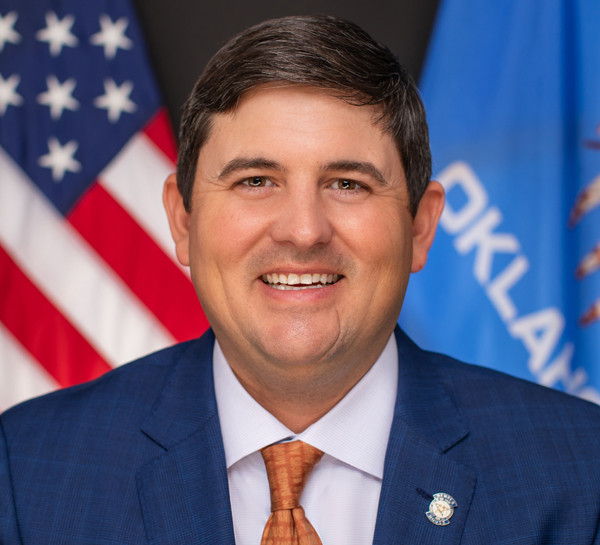
About the author: Marven Goodman publishes “The Sooner Sentinel” on Substack and invites readers to subscribe for free at this link which is where this story first appeared today. Goodman is a former Logan County Commissioner, and retired Army Lieutenant Colonel with a passion for digital electronics and computer science. His career began in 1973 as a U.S. Marine Corps avionics bench technician, troubleshooting circuits and exploring binary logic. He earned a Bachelor of Science in Education from the University of Central Oklahoma in 1993, blending military training with computer science studies.
Goodman served as Chief Information Officer on the Oklahoma Adjutant General’s staff and retired from the military in May 2000. First elected as Logan County Commissioner in June 2014, he served through January 2023, bringing his technical and leadership expertise to writing, governance, and public service.