
As policymakers seek to improve the poor academic outcomes in Oklahoma’s public schools, strengthening teachers’ ability to maintain discipline will be a key component of that effort.
State Rep. Rob Hall, R-Tulsa, recently led a legislative study exploring that challenge and declared, “A well-ordered classroom is a precondition of effective instruction. It is the foundation upon which all other educational activities are built. Because when chaos reigns in a classroom, both teaching and learning become exponentially more difficult, if not impossible.”
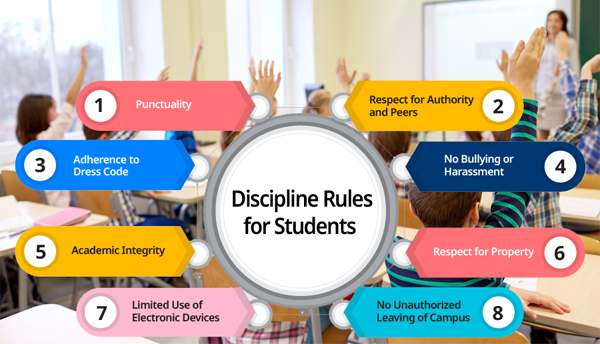
Hall noted most educators understand that reality but said “many current school discipline policies and philosophies” imposed by administrators undermine classroom discipline.
There are many reasons for that trend, but chief among them is that during the Obama and Biden administrations the federal government threatened schools with sanctions if the racial composition of students receiving discipline was out of line with their overall share of the student body—even if schools “evenhandedly” administered “facially neutral policies and practices.”
That effectively handcuffed many schools, since classroom misbehavior is based on the actions of individual students who care little about demographic niceties. In fact, it doesn’t take students long to realize they are being exempted from meaningful consequences for misbehavior (for whatever reason), which leads to even worse behavior.
Schools nationwide reduced student suspensions in response, which meant disruptive and even dangerous students remained in the classroom. That had an obvious, negative impact on learning for all students. It’s not surprising a 2015 EdNext poll found nearly 60% of teachers disapproved of the Obama administration’s actions.
The Trump administration has reversed those policies, but too many schools have retained lax discipline standards.
Lauren Greuel, associate counsel with the Wisconsin Institute for Law & Liberty, who spoke at Hall’s study, noted lawmakers can help by passing a “teachers’ bill of rights” that disallows persistently disruptive or violent students from immediately returning to class. The proposed law would also prohibit school boards from terminating or otherwise retaliating against teachers who remove students from class, enforce classroom rules, report unsafe conditions or disruptive behavior, request assistance for student concerns, or take action to protect the safety of the teacher or others.
Teachers need to know state officials have their back when it comes to classroom discipline.
An NEA Research report found that Oklahoma public schools had $15,111 in revenue receipts per student during 2024-2025 school year, an increase of 55 percent from $9,724 per student in the 2017-2018 school year. Despite that dramatic increase in funding, Oklahoma’s academic outcomes have not improved. In fact, they have largely declined.
Those poor outcomes are caused by multiple factors, but a system that prevents teachers from maintaining classroom control is certainly among them. This is a problem that money won’t solve, but good policy can.
About the author: Jonathan Small serves as president of the Oklahoma Council of Public Affairs.