
Oklahoma has something almost no one talks about. We run two completely different education systems—side by side, funded by the same taxpayers, serving many of the same students.
One is widely respected across the country. Employers praise it. Students line up for it. Other states try to copy it. The other struggles year after year. Parents are frustrated. Outcomes lag. Confidence erodes.
Most Oklahomans know both systems exist. Almost no one stops to ask the obvious question: How can the same state produce both a national model and a systemically failing system at the same time?

The Quiet Success Story: CareerTech
Oklahoma’s CareerTech system doesn’t get much political attention, but it should. It has a clear mission: prepare students for real jobs that exist in the real economy. Everything flows from that.
Programs are closely tied to employer needs. Courses are updated based on what industries actually require. Students graduate with tangible skills—welding, nursing assistance, aviation maintenance, coding—not just credits. There is very little confusion about success. Either students are gaining usable skills, or they’re not. Either employers are hiring graduates, or they’re not.
And because the system is built around that clarity, it behaves differently:
- Schools don’t chase dozens of competing priorities
- Instructors are often drawn from industry, not just education schools
- Performance is visible and practical
- Students see the connection between effort and outcome
CareerTech is not perfect. But it is coherent. It knows what it is trying to do—and it organizes itself accordingly.

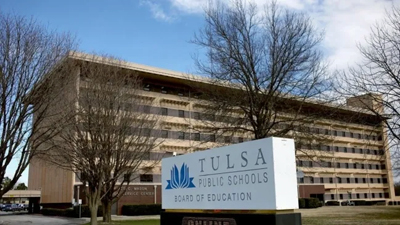
The System Under Strain: K–12
Now consider the traditional K–12 system. Its mission is far broader: educate every child, in every subject, under every circumstance. That’s a noble goal. But in practice, it often becomes a vague one.
What does success actually mean? Is it test scores? Graduation rates? College readiness? Social development? Equity? Workforce preparation? The answer is usually: all of the above. And when everything matters, nothing quite does.
The result is a system that struggles to focus:
- Schools are pulled in multiple directions at once
- Performance signals are often unclear or delayed
- Accountability exists on paper but is rarely decisive
- Struggling systems can persist for years without meaningful change
Teachers and principals work hard—often heroically—but they are operating inside a structure that does not consistently support clarity, focus, or correction.
Parents sense this. Students feel it. But the system itself rarely adjusts in a sustained way.
Same State. Different Rules.
So what explains the difference?
- It’s not the students.
- It’s not the taxpayers.
- It’s not even the educators.
The difference is the system itself—the way it is governed, the incentives it creates, and the clarity (or lack of clarity) about what success looks like.
CareerTech operates with:
- A focused mission
- Direct alignment with outcomes
- Clear feedback from the real world
K–12 operates with:
- Diffuse goals
- Indirect or delayed feedback
- Limited mechanisms for course correction
In other words, one system is designed to produce results. The other is designed to manage complexity. And complexity, left unmanaged, tends to win.
The Question We Don’t Ask
Here is the uncomfortable truth: Oklahoma already knows how to build an effective education system. We’ve done it. It’s just not the system most students rely on.
So the real question isn’t whether improvement is possible. It’s whether we are willing to apply the lessons we already have.
- What would happen if K–12 had the same level of clarity about outcomes?
- What if performance actually led to meaningful support—or meaningful consequences?
- What if the system adjusted itself the way CareerTech does, instead of absorbing failure year after year?
These are not radical ideas. They are already operating successfully within our own state.
A Contradiction We Can’t Ignore
For years, we have treated these two systems as if they have nothing to do with each other. But they do. They are both expressions of how Oklahoma chooses to educate its children.
One shows what is possible when a system is aligned around results. The other shows what happens when it is not.
At some point, we have to decide whether this contradiction is acceptable. Because right now, we are living with both a national treasure and a systemically failing system—at the same time, in the same place, for the same kids.
And that is not a mystery.
It’s a choice.
About the author: Ken Malloy is a retired energy policy lawyer and former federal regulatory strategist who has spent the last several years working to improve K–12 education governance in Oklahoma. He writes on civic accountability, institutional reform, and the responsibilities of self-government. He can be reached at ken@caem.org.