
Analysis: Something much bigger than immigration is happening at the Supreme Court, and I don’t think most Americans have noticed it yet. The Roberts Court isn’t just deciding controversial cases. It may be quietly redefining how the federal government itself is supposed to work.
Over the last week, the Supreme Court decided three important immigration cases. As usual, the news media immediately divided into two camps. One side said the Court was anti-immigrant. The other side said it was simply enforcing the law.
I think both sides are missing something much bigger.
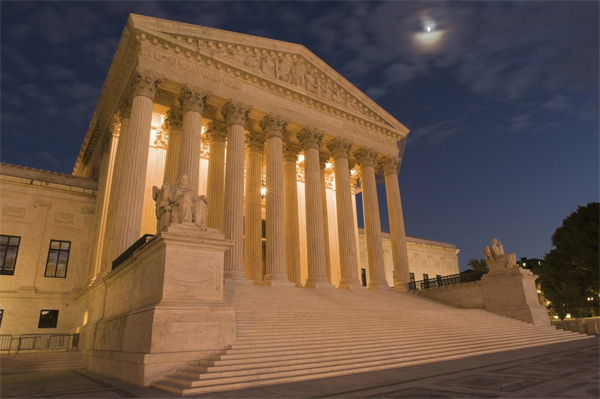
The three immigration cases are not just about immigration. They are another example of a much broader trend that has been developing in the Supreme Court for several years. Here’s how I would explain it over breakfast with friends.
Imagine that Congress passes a law saying, “The Secretary of Education shall improve American education.” That sounds wonderful, but what does it actually mean?
- Can the Secretary abolish grades?
- Can the Secretary require uniforms?
- Can the Secretary fire teachers?
- Can the Secretary spend billions of dollars in ways Congress never specifically discussed?
Most of us would probably answer, “Well, Congress ought to be more specific than that.” That’s exactly the direction I think the Roberts Court has been moving.
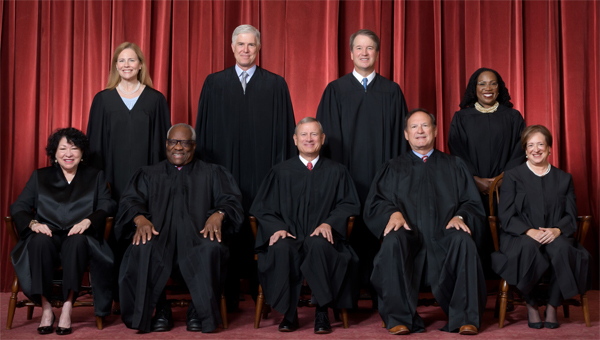
For many years, Congress often passed laws that were broad and somewhat vague. Federal agencies then filled in the details. If someone challenged the agency, courts frequently deferred to the agency’s interpretation.
The Roberts Court seems increasingly uncomfortable with that approach.
Instead, it keeps asking the same question: Who is supposed to make this decision?
That sounds simple, but I think it explains a remarkable number of recent Supreme Court decisions.
Take the famous Chevron case, which the Court overruled last year. Under Chevron, courts generally deferred to an agency’s reasonable interpretation of an unclear statute. The Roberts Court essentially said, “No. It is the courts’ job to determine what Congress meant, not simply accept the agency’s interpretation.”
Then consider the Major Questions Doctrine. The Court has said that if an executive agency wants to make a decision involving enormous political or economic consequences, Congress must clearly authorize that action. Agencies cannot discover sweeping new powers hidden in vague language.
Now look at the recent decision limiting nationwide injunctions. The Court wasn’t really deciding immigration policy. It was deciding the proper role of federal district judges. The majority said a single district judge generally should resolve the dispute before the court, not supervise the entire Executive Branch across the nation.
Finally, consider this week’s immigration cases.
- One asked whether someone standing outside the United States at a port of entry had legally “arrived” in the country.
- Another asked whether courts could second-guess the Secretary of Homeland Security’s decision to end Temporary Protected Status.
- Another involved what procedures apply to a lawful permanent resident returning to the United States.
These seem like completely unrelated cases. But I don’t think they are. Each one asks essentially the same question: Who has the authority to make this decision? Congress? The Executive Branch? Or the federal courts?

The Roberts Court has answered these questions with increasing consistency.
- Congress makes the laws.
- Executive agencies carry out those laws.
- Courts interpret those laws.
Each branch should stay within the authority the Constitution and Congress have assigned to it.
That doesn’t tell us what immigration policy should be. Reasonable people can disagree about immigration. The Court isn’t saying Congress must have strict immigration laws. Nor is it saying Congress must have generous immigration laws. It is saying that if Congress wants either one, Congress should clearly say so.
In other words, don’t expect agencies or judges to write the policy for you. Write it yourself.
That’s a very different way of looking at these decisions. Most television commentators argue about whether the Court reached the right political result. I think the more interesting question is whether the Court is trying to restore clearer lines of responsibility within the federal government. If that’s true, then these immigration cases are only part of a much larger story.
They fit alongside the end of Chevron, the Major Questions Doctrine, and the Court’s recent decisions limiting nationwide injunctions.
The common thread is accountability. If Congress wants a major national policy, Congress should vote for it. If an executive agency wants to act, it should be able to point to authority Congress actually gave it. If a federal judge issues a remedy, it should be one the law authorizes.
Whether you agree with that philosophy or not, it has one important advantage. When something goes wrong, the public knows who is responsible. Congress cannot blame the agencies. The agencies cannot blame the courts. The courts cannot blame Congress. Each branch owns the decisions that belong to it.
I’m not certain that history will prove this interpretation of the Roberts Court to be correct. But I do think it offers a more useful way to understand many of the Court’s recent decisions than simply labeling them as conservative or liberal.
Maybe the biggest story isn’t that the Court is changing immigration law. Maybe the biggest story is that the Court is trying to redraw the constitutional boundaries between Congress, the Executive Branch, and the Judiciary—and reminding each branch that our Constitution gave it an important job to do.
Years from now, people may not remember the details of these three immigration cases. Most Supreme Court cases eventually fade into history. But historians may remember something much larger. They may conclude that this was the period when the Supreme Court began insisting that every branch of the federal government return to the job the Constitution assigned it.
- Congress must make the big policy decisions.
- Executive agencies must carry out—not create—those policies.
- Federal judges must interpret the law, not supervise the government.
That idea explains far more than immigration. It helps explain the end of Chevron, the Major Questions Doctrine, the Court’s limits on nationwide injunctions, and a growing number of other decisions that at first seem unrelated.
If that’s right, then the Roberts Court isn’t simply deciding today’s controversies.
It is quietly attempting to restore a constitutional design that had gradually drifted over many decades.
Whether history judges that effort as wise or unwise, successful or unsuccessful, may ultimately be the defining question of the Roberts Court itself.
The defining project of the Roberts Court may not be to move American law to the right or to the left. It may be to move American government back toward the constitutional structure the Framers intended.

About the author: Ken Malloy is a retired energy policy lawyer and former federal regulatory strategist who has spent the last several years working to improve K–12 education governance in Oklahoma. He writes on civic accountability, institutional reform, and the responsibilities of self-government. He can be reached at ken@caem.org.