
A Bold Path to Home-ownership Freedom and Bureaucratic Accountability in Oklahoma
Oklahoma now stands at a critical crossroads. State Question 841, an initiative petition spearheaded by principled conservative State Sen. Shane Jett, proposes a bold yet necessary reform: the phased elimination of ad valorem property taxes on primary residences, or homesteads.
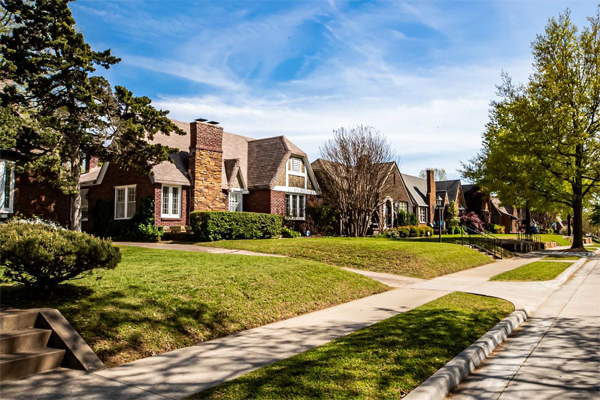
This measure, filed with the Secretary of State’s office and soon to be in the midst of a petition drive requiring over 92,000 signatures to reach the November 2026 ballot, would exempt about 33% of assessed value in 2027, 67% in 2028, and achieve full elimination by 2029. Limited strictly to owner-occupied primary homes that qualify under Oklahoma’s existing homestead exemption framework, requiring ownership, occupancy as the principal residence, and application through county assessors, this reform excludes businesses, rentals, and vacation properties. It safeguards pre-2027 bonded indebtedness for schools and local entities, ensuring no disruption to existing obligations.
As fiscal conservatives, we at the Sooner Sentinel applaud this initiative not as a giveaway, but as a restoration of property rights and a bulwark against government overreach. Yet, we must go further: rather than burdening the legislature with replacing the estimated $400 million in lost revenue in 2027 (rising to $1.2 billion by 2029), it’s time to demand spending cuts, particularly in the bloated administrative apparatus of public education.
The Moral and Economic Imperative of Property Tax Relief
Property taxes on one’s home represent a fundamental affront to the American dream. Imagine toiling for decades to pay off your mortgage, only to face an annual bill from the government that treats your primary residence as a perpetual revenue stream. This isn’t ownership, it’s tenancy under the state. Fiscal conservatives have long argued that such taxes distort markets, fuel unchecked government expansion, and penalize the very citizens who contribute most to their communities through responsible home-ownership. In Oklahoma, where property taxes generated $3.9 billion in 2024, comprising over half the budget in 62 of our 77 counties, this system has become a drag on economic vitality. By targeting relief exclusively to homesteads, SQ 841 incentivizes Oklahomans to invest in their futures, build equity, and stay rooted in our state, rather than fleeing to lower-tax havens like Texas or Florida.
From a conservative lens, eliminating these taxes aligns with core principles of limited government and individual liberty. Property taxes often lead to restrictive zoning and housing shortages, as entrenched interests use them to protect their own assets while blocking new development. They disproportionately burden middle-class families, who see their hard-earned dollars siphoned into inefficient public coffers. Consider the broader economic ripple: freed from this annual levy, homeowners could redirect funds toward savings, local businesses, or even charitable giving, choices that foster self-reliance over state dependency. Proponents rightly highlight how this shift encourages home-ownership among local residents, strengthening communities without subsidizing speculators or absentee landlords. In an era of inflation and stagnant wages, SQ 841 offers tangible relief, putting money back into the pockets of those who earned it.

This burden falls heaviest on our retired homeowners, many on fixed incomes, who find themselves priced out of the very homes they’ve spent lifetimes building and maintaining. Across Oklahoma, soaring property taxes, often inflated by voter-approved school bonds that fund non-essential extravagances like multi-million-dollar football stadiums and opulent administrative buildings, are forcing seniors to sell and uproot their lives. Take the McAlester Public Schools’ push for a $12 million football stadium upgrade or the Oklahoma City Public Schools’ $955 million bond package, which includes new athletic facilities at high schools like John Marshall, projects repaid directly through ad valorem taxes that hit fixed-income retirees hardest.
These aren’t investments in core education; they’re symbols of bureaucratic excess, where taxpayer dollars prop up lavish amenities while essential services languish. Fiscal conservatives decry this as a betrayal of stewardship, compelling vulnerable Oklahomans to subsidize empire-building at the expense of their security. SQ 841 steps in as a vital safeguard, eliminating this regressive tax on primary residences and allowing retirees to age in place with dignity, free from the threat of government-induced displacement.
Moreover, this isn’t radical experimentation; it’s a measured phase-out that allows time for adjustment. By preserving taxes on non-residential properties and honoring existing bonds, the measure demonstrates fiscal prudence. Critics from local governments decry potential service cuts, but that’s precisely the point: government shouldn’t grow indefinitely on the backs of homeowners. SQ 841 forces a long-overdue reckoning with priorities, compelling officials to focus on essentials rather than empire-building.
The Folly of Revenue Replacement: Cut the Bloat Instead
While we champion SQ 841’s tax elimination, we vehemently oppose the notion embedded in its framework, that the Oklahoma Legislature must scramble to “replace” the lost revenue through alternative means. This knee-jerk response exemplifies the big-government mindset that fiscal conservatives must combat. Replacing one tax with another simply rearranges the deck chairs on a sinking ship of fiscal irresponsibility. Instead, let’s seize this opportunity to slash wasteful spending, starting with the administrative excesses plaguing our public education system.
Oklahoma’s public schools have seen per-pupil revenue skyrocket by 51% since 2018, reaching $13,028 in the 2023-2024 school year. Yet, academic outcomes have declined steadily, with students struggling in core subjects despite the influx of funds. This disconnect screams inefficiency. A staggering $955 million, out of a total $7.7 billion spent on schools, was devoured by administrative costs in recent years, with districts collectively forking over $670 million for general and school administration in 2022-23 alone. These figures represent layers of bureaucracy: superfluous superintendents, redundant staff, and top-heavy districts where more dollars go to paperwork than to classrooms.
Nowhere is this excess more glaring than in the exorbitant salaries of school superintendents and their entourages of assistant superintendents, counselors, and DEI administrators, who often command compensation packages that dwarf those of the state’s highest elected officials. In the 2024-2025 school year, superintendents in districts like Norman pulled in over $411,000 in total compensation, while Tulsa’s topped $379,000, figures that eclipse the Governor’s current salary of $147,000 and even the recently approved raise to $185,000, which should rightfully position the Governor as Oklahoma’s highest-paid public servant. Assistant superintendents in large districts routinely earn $150,000 to $250,000, supplemented by lavish benefits, while DEI coordinators, roles that fiscal conservatives view as ideological indulgences rather than educational necessities, add hundreds of thousands more to the payroll without demonstrable improvements in student achievement. This upside-down hierarchy, where local education bureaucrats out-earn the chief executive overseeing the entire state, epitomizes the misplaced priorities fueling Oklahoma’s education spending crisis.
Fiscal conservatives know that more money doesn’t equal better results; it’s how the money is spent that matters. Pouring replacement revenue into this black hole would only perpetuate the cycle of waste. Studies and common sense alike show that unchecked government growth, fueled by easy tax dollars, leads to diminished accountability and poorer outcomes. Defunding through targeted cuts, such as consolidating administrative roles, streamlining operations, and prioritizing teachers over bureaucrats, could absorb the revenue shortfall without harming students. In fact, it might improve education by refocusing resources on what truly counts: quality instruction, not endless overhead.
Opponents will cry that cuts endanger schools, but history tells a different story. When governments are forced to live within their means, innovation flourishes. Vouchers, charter expansions, and performance-based funding, hallmarks of conservative education reform, have shown that competition drives excellence without ballooning budgets. Mandating revenue replacement ignores these lessons, opting for the lazy path of tax hikes elsewhere, perhaps on sales or income, which would stifle economic growth and punish working families. We say no: let SQ 841 be the catalyst for real reform. Trim the fat in education administration, and watch Oklahoma thrive.
Broader Benefits: A Blueprint for Prosperity
Beyond education, SQ 841’s passage would ripple across the state. Property taxes currently account for 21% of all state and local revenue, often propping up non-essential programs. Eliminating them for homesteads shifts the burden to more voluntary taxes, like sales on consumption, aligning with conservative ideals of user-pays systems. Homeowners, especially seniors on fixed incomes, would gain security against rising assessments that threaten to displace them from their lifelong homes. Young families could afford to buy in, boosting population retention and economic stability.
Critics warn of devastated local services, but this fearmongering overlooks the power of prioritization. Counties and schools can adapt by embracing efficiency, merging districts, outsourcing non-core functions, and leveraging technology. Oklahoma’s fiscal year 2025 General Revenue Fund collections already exceeded estimates by $224.7 million, proving there’s headroom for smart cuts without catastrophe. This isn’t austerity; it’s accountability.
The separation between taxpayers and government service receivers in public education highlights a fundamental aspect of redistributive policy, where funding is drawn from a broad base of contributors, often through property, income, and sales taxes, while direct benefits primarily accrue to families with school-age children. In systems like the U.S., this divide means childless individuals, elderly homeowners, or private school users subsidize public schools.
A Call to Action for Fiscal Conservatives
As we approach the petition deadline and the 2026 ballot, Oklahomans must rally behind SQ 841. Sign the petition, spread the word, and demand that our leaders reject revenue replacement in favor of spending restraint. This measure isn’t just about tax relief, it’s about reclaiming our sovereignty from an ever-encroaching state.
By eliminating property taxes on primary residences and forcing cuts to administrative bloat, we can build a leaner, more effective government that serves the people, not itself. And don’t get me started on eliminating payroll deductions for teacher union dues; that’s the next frontier in breaking the grip of special interests and ensuring every dollar goes straight to educating our kids. The Sooner State deserves no less. Let’s make fiscal freedom a reality, sign the petition and vote yes next November.

About the author: Marven Goodman publishes “The Sooner Sentinel” on Substack and invites readers to subscribe for free at this link which is where this story first appeared. Goodman is a former Logan County Commissioner, and retired Army Lieutenant Colonel with a passion for digital electronics and computer science. His career began in 1973 as a U.S. Marine Corps avionics bench technician, troubleshooting circuits and exploring binary logic. He earned a Bachelor of Science in Education from the University of Central Oklahoma in 1993, blending military training with computer science studies.
Goodman served as Chief Information Officer on the Oklahoma Adjutant General’s staff and retired from the military in May 2000. First elected as Logan County Commissioner in June 2014, he served through January 2023, bringing his technical and leadership expertise to writing, governance, and public service.