
Analysis: With millions of missing money still under investigation, the Tulsa Public School District (TPS) Board of Education Monday voted to approve a staff proposal to close or consolidate 14 elementary schools, two middle schools and one alternative program beginning with the 2027-28 school year.
The decision came after a short series of public meetings in which parents, grandparents, teachers, state legislators, education specialists (including a candidate for State School Superintendent), and citizens spoke against the plan. Public comment at the final meeting was respectful, reasoned, and at times tearful as they begged District officials to delay or reject what they considered a deeply faulted school disaster.

This ending of 17 public schools also comes a few short months after Tulsa voters approved a $609 million bond proposal also opposed by many. However, TPS is one of the top three employers within the city and, with friends at oddly timed elections, pass all things, “for the children.”
Prior to the bond vote, former Tulsa City Councilor Jayme Fowler called for a collaboratively developed comprehensive reform plan focused on “rationalizing schools, revitalizing neighborhood schools and improving educational fundamentals” in an interview with Tulsa Today March 20 you can read at this link. Fowler also spoke before the final Monday vote.
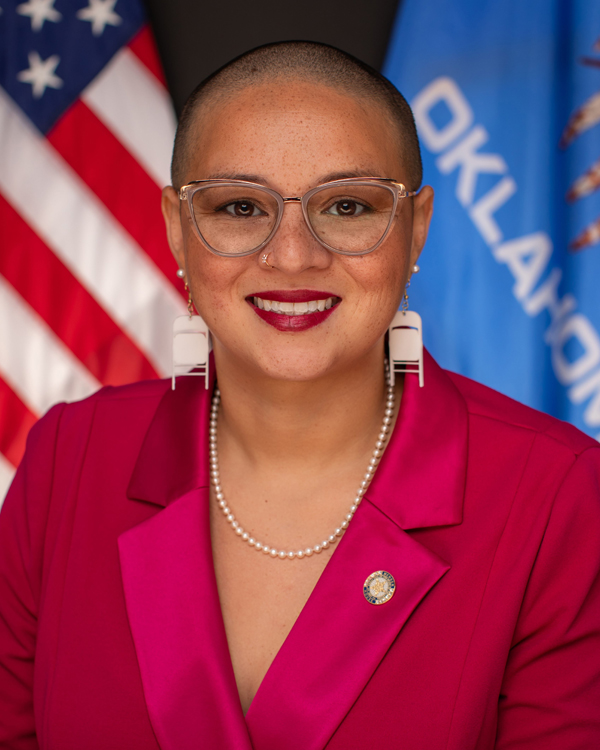
OK Rep. Michelle McCain (D-Dist. 72) said, “I want to talk specifically about the way that this plan has been presented. I understand the financial need for consolidation. It’s something that we have probably needed to do for years, which is why it’s so frustrating the way that this has been presented. The plan was presented before community feedback was taken in. The plan was not fully transparent. Central High School, as it is right now, is closing. The building will be used, [how] has not been made clear to my constituents, nor was it clear to me in the presentation. I wonder how many good ideas, such as the suggestion of combining Sequoyah and Springdale, are in the survey that could have been used to formulate another plan. I’m also curious why there weren’t any alternatives for you-all to choose from, there’s this one plan, and it seems from the very beginning that the vote was decided.
“I see just from the schools in my district a lack of consideration for the actual circumstances in the community… I know you have hard decisions to make, but I think the responsible thing and the thing that would demonstrate that you’re listening would be to table this vote and have a more robust conversation about this plan… Tulsa Public Schools has lost the trust of many in the community, this plan and the way that it has been shoved through has further broken that trust.” McCain added.
Nearly thirty community members, educators, union leaders, and officials addressed Tulsa Public Schools’ proposed consolidation and closure Monday night. Many urged postponement and demanded transparent, school-by-school analyses of savings, transition costs, staffing impacts, and student outcomes. Mitchell Elementary supporters highlighted measurable academic gains, strong attendance, and deep community ties, proposing a one-year improvement plan.
Others emphasized cultural and equity safeguards, protections for support staff, and alternatives such as boundary adjustments and targeted consolidations to preserve dual-language programs.
Ken Malloy criticized rushed timelines, insufficient analysis, and called for postponement until data and alternatives are presented.
Leanne Jimenez (Tulsa Classroom Teachers Association) urged enforceable commitments on staffing, class sizes, enrichment, student supports, and accountability if restructuring proceeds.
Paul Hassink and Jarred Buswell pressed for transparency, long-term tracking of transferred students’ outcomes, and culture-focused improvements to drive enrollment and retention.
Catherine DeCamp proposed relocating Springdale into Sequoyah to preserve dual-language programs and leverage bond funds and existing routes.
Stephanie Brower advocated boundary adjustments and full-cost assessments to keep Kerr open.
Tabitha Devens emphasized Hoover’s inclusive environment for neurodivergent students.
Nancy Leonard (AFT Local 604) demanded job and benefits protections and inclusion of support staff in planning, citing foundational roles and low wages.

Only Bob Jack, a declared member of several TPS committees, argued realignment is necessary to address excess capacity and declining enrollment.
Opponents warned of harm to low-income neighborhoods, specialized programs, and student well-being.
“With this difficult decision, we are able to guarantee a dedicated art, music, and PE teacher at every elementary school; increase the number of students with access to a highly qualified teacher; maximize and stretch every dollar for every student,” TPS’s Superintendent Dr. Ebony Johnson told media, but several citizen speakers noted the same promises made during previous closures were not fulfilled.
Superintendent Johnson said if the proposal was not approved, TPS wouldn’t be able to pay its employees.
TPS salaries for executive level employees are extremely large as teachers are paid a pittance. For one example, the Tulsa Superintendent’s base salary is more than twice what the Governor of the State of Oklahoma earns each year.
Given the failure of the District to include citizens in meaningful transparent public discussions and issue resolutions, the only hope for students to receive a quality education now appears to be a state take-over of the District. They apparently can’t operate themselves honorably (given discovered fraud) or inclusively (given this rushed vote) for public benefit.
Does TPS need to be split? Some suggest they have enough administrators to run three districts. If the Oklahoma Department of Education has any worth, the Oklahoma Governor any clue, or Justice any backbone, they must address this Tulsa train-wreck.
About the author: David Arnett’s beginning in print journalism was not planned in 1985 but covered by the Columbia Journalism Review in 1987. After 11 years in print, he established TulsaToday online in 1996 and Straight Up on Substack in 2022 providing email subscriptions. In April 2026, he began the YouTube Channel, Straight Up Dave. Arnett is identified nationally as a “Veteran Oklahoma Political Journalist” and locally as an “Equal Opportunity Aggravator.”