
As published by The Wall Street Journal on April 10, 2026:
It was an anticlimactic end to a legal and political horror story: On Monday the U.S. Supreme Court said it wouldn’t review Stroble v. Oklahoma Tax Commission, a state Supreme Court decision that upheld Oklahoma’s authority to tax residents regardless of their race. Why would that even be an issue? It’s a long and complicated historical tale.
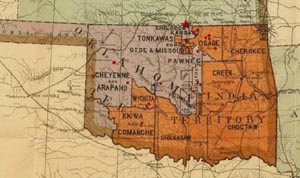
Before Oklahoma gained statehood in 1907, its eastern part was known as Indian Country—an area consisting largely of the historical reservations of the Five Tribes that were forcibly relocated from Southeastern states along the Trail of Tears between 1830 and 1850. After the Civil War, Congress dissolved the reservations and land was allotted to the individuals who lived there as federal law weakened or abolished tribal governments.
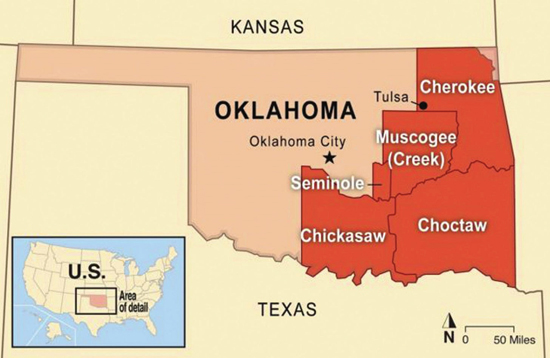
For more than a century, Oklahoma maintained unquestioned jurisdiction over its territory. The structure of state government and public infrastructure were built on the understanding that Congress had disestablished the former reservations. But in McGirt v. Oklahoma (2020), the Supreme Court held 5-4 that Congress had never disestablished these reservations for purposes of the Major Crimes Act, which provides that states can’t prosecute certain serious crimes on Indian land.
Chief Justice John Roberts argued in dissent that the decision’s “consequences are drastic precisely because they depart from how the law has been applied for more than a century—a settled understanding that our precedents demand we consider” and that “they are reason to think the Court may have taken a wrong turn in its analysis.”
McGirt presented my administration with a challenge no governor had ever faced: how to preserve public safety, equally enforce the law, and defend the sovereignty of a state suddenly told that longstanding assumptions about its authority were wrong.
This re-creation of Indian country resulted in the removal of the state’s criminal jurisdiction over the most serious crimes—including murder, aggravated sexual abuse and kidnapping. When Indian defendants were charged with such crimes, jurisdiction shifted to federal or tribal prosecutors, both ill equipped to shoulder the load. Federal prosecutors lacked adequate resources and staffing, while tribal courts were capped at three-year sentences, creating loopholes that the worst criminals could exploit.
Final convictions were thrown into question as defendants rushed to challenge their sentences. Victims were left with the prospect of reliving their trauma through new trials or seeing their attackers released. Routine prosecutions became jurisdictional disputes. A drug bust in northeast Oklahoma ended with an Indian walking free and two people, one black and one white, sitting in prison—disparate treatment based solely on race.
Tribal governments supported these challenges while advancing expansive theories of McGirt, pressing into civil jurisdiction and taxation. They sued police departments and district attorneys for merely pursuing and prosecuting criminals. Outside the courtroom, McGirt became leverage. Tribes invoked expanded reservation boundaries in disputes over tax, tobacco and motor-vehicle compacts—areas that had previously been marked by cooperation.
My administration set out to ensure McGirt did not become a wholesale restructuring of Oklahoma’s jurisdiction. At its core, the decision conflicted with a basic principle of fairness: that the law should apply equally without regard to race or ancestry.
Members of Oklahoma’s congressional delegation, state legislators and other state leaders—including former governors and the attorney general—urged acquiescence to an expansive reading of McGirt. Tribal entities, which receive billions of federal dollars and aren’t subject to any state or federal transparency laws, spend millions in campaign contributions every election cycle and are the largest advertisers across the state’s media outlets.
Despite these dark-money efforts, every major case that followed narrowed McGirt and reaffirmed the state’s authority. In Oklahoma v. Castro-Huerta (2022), the justices held that Oklahoma retains default jurisdiction to prosecute crimes when the defendants are non-Indians. Critically, the justices reaffirmed that Indian country is part of the state, not separate from it.
Oklahoma state courts also limited the impact of McGirt. The Oklahoma Court of Criminal Appeals held that it does not apply retroactively, preserving the finality of countless convictions. It held that defendants could waive McGirt-based jurisdictional claims. It confirmed the state’s authority to prosecute nonmember Indians, a holding also confirmed by a federal district court.
As the Five Tribes attempted to use the courts to expand McGirt to taxation and civil law, the Oklahoma Supreme Court made clear that McGirt did not alter the applicability of Oklahoma’s civil and taxing jurisdiction.
Attempts to stretch McGirt beyond its bounds have been consistently rejected. Oklahoma stands on equal footing with every other state, with full authority to govern within its borders. McGirt will remain a part of Oklahoma’s legal history—and the justices haven’t overturned it—but it is time to accept it for the anomaly it is, and close the chapter on this divisive period.
About the author: John Kevin Stitt (born December 28, 1972) is an American businessman and politician serving as the 28th governor of Oklahoma since 2019. A member of the Republican Party, he was elected in 2018, with 54.3% of the vote. Stitt was reelected to a second term in 2022, with 55.4% of the vote. He grew up in Norman, Oklahoma, and graduated with a bachelor’s degree in accounting from Oklahoma State University. He is the founder and former chairman and CEO of Gateway Mortgage Group.