
In a public forum May 12, Tulsa County Republican Chairman Melissa Myers announced that her office had contacted both Oklahoma Republican Candidates for Attorney General. Jon Echols confirmed immediately. Jeff Starling did not.

Myers said, “For the longest time, there was no response from Starling until just a few weeks ago, when he asserted he had another engagement. As a result, we will have a forum to get to know Jon Echols.”
The Tulsa Republican Party Attorney General Forum was moderated by a broadcast personality. Jon Echols was first asked to introduce himself.
Echols: Thank you for having me here. My philosophy on debates and forums is any place, anytime, any chance I get to talk with voters, that’s what I want to do. I am a fifth-generation Oklahoman, but other than my salvation, the best part of me is right over there—my wife Kristen.
I am a lawyer. I am a small business owner. I served twelve years in the Oklahoma Legislature, And I am proud to be the conservative public safety candidate to be your next Attorney General. And I am so excited to get the answers tonight and to be here in Tulsa, Oklahoma. Thank you so much for having me.
Moderator: Are you willing to challenge the governor of your own party?
Echols: I’ve already done it twice. I’ll give you the first one. I called on my opponent to resign from Governor Stitt’s cabinet when Governor Stitt came out and bucked President Donald J. Trump on the immigration issue. When he came out and essentially said we need more illegal immigration. I am the guy that made illegal immigration a state crime in the State of Oklahoma. He was wrong then, and he’s wrong now.
We can have good-natured debate, but tonight, I am disappointed you are just hearing from me. This is the fourth debate my opponent has chosen not to show up on, or we could be having this conversation together right now. But to be clear, I am never afraid to call out anybody and not afraid to defend my record.
Moderator: How do you ensure that legal decisions are based on the law and not influenced by donors or party leadership?
Echols: One thing you know about me is I am not going to be influenced. I just gave seven thousand dollars back. But number two, when you are talking about a conservative attorney general, that’s a little bit different than a conservative legislator.
Think about it from the perspective of the courts for Justice Antonin Scalia and for Justice Clarence Thomas. What they say is they were ‘slaved to the law.’ What does that mean? That means whether they agreed with it or not, they would follow the law.
I am the second generation out of poverty. I am a poor kid from South Oklahoma City. We didn’t have any political connections and we still don’t. I am going to treat everyone, whether they’re from Nichols Hills or Southern Hills or the wrong side of the tracks the same. I am going to follow the law.

Moderator: How do you handle a St. Isidore issue with when most of the party and the governor is on the other side of the issue?
Echols: I am a school choice person. In the St. Isidore case, I filed an amicus brief with the ACLJ. You’ll probably hear me talk about the ACLJ a lot. If you know anything about the American Center for Law and Justice. That’s the type of lawyer I am. I’m going to stand for your religious liberty.
I have a belief system that God gave children to their parents. That is what I believe the system is set up for, and I will continue to stand firmly in that belief system.
Moderator: What is the greatest legal threat facing Oklahoma citizens right now?
Echols: Illegal marijuana, specifically from China and the Mexican cartels. That is the greatest legal threat facing us right now inside the state of Oklahoma. The citizens voted for medical marijuana, but what has happened is we have been infiltrated by illegal foreign influence.
They will be gone and destroyed. And when I say that, and when I talk about what I’ve done as a legislator, it’s not to brag. I was the one that passed the law that gave the attorney general the authority [to act against illegal grows].
I am proud to have law enforcement’s back. We are going to shut down many of these Chinese backed or Mexican Cartel backed operations.
Moderator: Was it a mistake for the city of Tulsa to enter into an agreement with the Muscogee Creek Nation? Or should that be a state level agreement?
Echols: It should be a state level agreement. Part of the problem is that we have a patchwork of jurisdictional issues. When I explain McGirt in the details, what you are going to hear me talk about is the victims of crime. Because at the end of the day, that’s who I am concerned about. When I talk about perpetrators getting justice, it’s because I am an ordained Southern Baptist deacon; I believe in a Lord that believes in justice. He believes in redemption too, but he also believes in justice.
We have a jurisdictional patchwork. I will say part of the reason Tulsa made the agreement is the failure of the state. Had the state come in and worked out functional agreements, Tulsa would have been covered.
Again, I am so proud to have these sixty sheriff endorsements. They are concerned [at times of arrest] about figuring out which tribal boundary covers which part of the state. Those endorsement attest that I am the guy that’s going to lead us to something that actually has justice for offenders and victims.
Audience Question: We are seeing a rush of data centers come to Oklahoma. Could you talk about the changes in the law that made Oklahoma so attractive to them? Do you see a role for your consumer protection group in the amount of energy, water, and cost of all this?
Further, in the approval process, NDAs (nondisclosure agreements) have been used by big money and big PR firms, and they throw it at officials. Then officials throw it to the public as though that covers in secrecy all project details. Could you clarify?
Echols: I am going to hit both of those. My race is a good example of that. It truly is big business versus small business. It’s Oklahoma business versus Virginia business, and then huge publicly traded corporate business versus me, a seven-time small business entrepreneur.
NDAs are a terrible idea. They shouldn’t be used in state government. I would have supported the bill that would have gotten rid of them. When the governor was chasing Mitsubishi or whatever else. I wouldn’t sign the NDA.
Oklahoma can’t be the dumping ground for data centers. The way it became a dumping ground for wind, we can’t do that.
Here is what we must do in the State of Oklahoma. Number one, our water and number two, our electricity. I am going to implement a very specific plan on both of those. As to electricity, I am the lawyer for the rate payers when you elect me as your next attorney general and I will make sure that data centers pay for any increase, any cost that is associated so it doesn’t go on your electricity rates. I am running against the current Oklahoma Secretary of Energy, who hasn’t said that we have a difference on this issue.
The second issue is water. Data centers are massive users of water. One of the things the legislature did this year was pass a bill requiring reclaimed water for cooling, which would have cut about ninety five percent of the total water utilization.
Editor’s Note: A longer version of this story is available on the Substack site here. We have found readers on Tulsa Today like short articles. Long form journalism (this full story is very long) is featured on Substack and delivered by email.
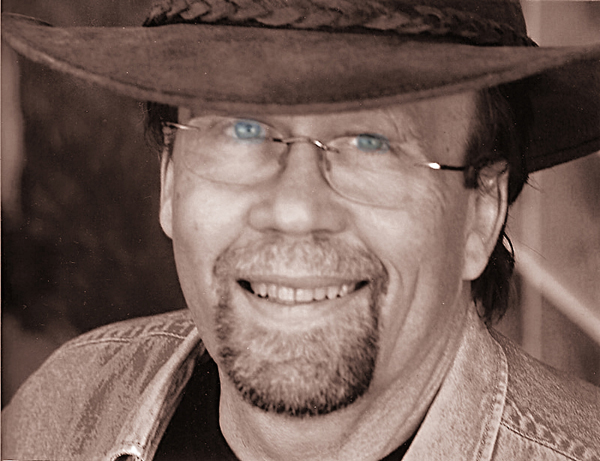
About the author: David Arnett’s beginning in print journalism was not planned in 1985 but covered by Rebecca Martin writing for the Columbia Journalism Review in 1987. After 11 years in print, he established TulsaToday online in 1996 and Straight Up on Substack in 2022 providing email subscriptions. In April 2026, he began the YouTube Channel, Straight Up Dave. Arnett is identified nationally as a “Veteran Oklahoma Political Journalist.”