
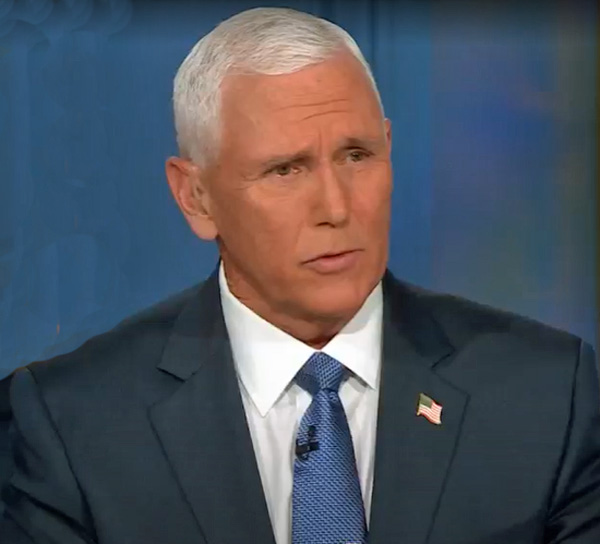
Analysis: Former Vice President Mike Pence has a new book out arguing that Republicans need to return to the Reagan-era version of conservatism and move away from the populism associated with Donald Trump. Pence sees Trump populism as a departure from conservative principles. Many conservatives, myself included, see it differently.
The real debate is not whether Ronald Reagan was right for his time. The real debate is whether the world that Reagan confronted is the same world we face today.
I don’t believe it is.
What Pence Gets Right
To be fair, Pence is not wrong about everything. Populism carries risks. It can become overly personal. It can be driven by frustration rather than careful analysis. It can sometimes value disruption more than good governance.
Those are legitimate concerns.
But Pence makes a mistake when he treats populism as the cause of the Republican Party’s transformation rather than the result of it. Trump did not wake up one morning and convince millions of conservatives to abandon Reagan conservatism. Something much larger was happening.
Conservatives began losing confidence in the assumptions that had guided American policy for decades.
The China Wake-Up Call
The first major crack in the foundation was China.
For years, Republican and Democratic leaders alike argued that expanding trade with China would be good for America and good for China. The theory was simple. As China became more prosperous, it would gradually become more democratic, more open, and more integrated into the rules-based international order.
That was the hope. Instead, China became richer, stronger, more technologically advanced, and more militarily powerful while remaining firmly under authoritarian control. Millions of manufacturing jobs disappeared from American communities. At the same time, the United States helped create its own principal geopolitical competitor.
Many conservatives looked at those results and asked a simple question: “What exactly did we get in return?” That question was never adequately answered.
The Other Cracks in the Consensus
China was only the beginning.
The wars in Iraq and Afghanistan raised serious questions about nation-building and America’s role as the world’s policeman. What were originally presented as limited missions turned into decades-long commitments with enormous costs in blood and treasure.
Then came the financial crisis of 2008. Millions of Americans watched financial institutions, regulators, and political leaders fail in ways that shattered confidence in elite expertise.
Immigration added another layer of concern. Many Americans concluded that Washington was either unwilling or unable to maintain meaningful control of the border. Questions of sovereignty and national identity became impossible to ignore.
Each of these developments, by itself, might have been manageable.
Together, they created a profound loss of confidence in the post-Cold War establishment.
The Obama Years and the Growth of Doubt
The election of Barack Obama accelerated this process. To many Americans, Obama represented the high-water mark of the modern liberal worldview. His administration embodied confidence in globalization, technocratic expertise, multiculturalism, international institutions, and administrative government.
His supporters saw this as progress. His critics increasingly saw a growing gap between elite assumptions and everyday reality.
The political polarization that followed was not simply the product of personality or partisanship. It reflected a deeper disagreement about whether the governing institutions of the country still understood the problems facing ordinary Americans.
Donald Trump did not create that disagreement. He recognized it.

Trump as a Response, Not a Cause
This is where Pence gets the story wrong. Trump populism is not a rejection of conservatism. It is conservatism adapting to new realities.
Conservatives did not suddenly stop believing in markets, strong families, national defense, personal responsibility, or limited government. What changed was their confidence in the institutions and assumptions that had governed American policy for decades.
Trump gave voice to concerns that many voters believed neither party was willing to address. He challenged assumptions about trade, immigration, foreign intervention, and elite expertise that had gone largely unquestioned for years.
One can disagree with some of Trump’s answers while still recognizing that the questions he raised were real.
The Future of Conservatism
The task of conservatism is not to return to 1985. The task of conservatism is to apply conservative principles to the realities of 2026.
Pence sees Trump populism as a deviation from conservatism. Many conservatives see it differently. They see it as conservatism adapting to a world in which many of the assumptions underlying the Reagan-Bush-Clinton-Obama consensus no longer appear valid.
Trump did not create that reassessment. He recognized it, gave it a voice, and built a political movement around it.
That is why the populist movement remains strong today. And that is why simply calling for a return to the Reagan era is unlikely to persuade conservatives who believe the world has changed far more than Mike Pence is willing to acknowledge.

About the author: Ken Malloy is a retired energy policy lawyer and former federal regulatory strategist who has spent the last several years working to improve K–12 education governance in Oklahoma. He writes on civic accountability, institutional reform, and the responsibilities of self-government. He can be reached at ken@caem.org.