
Data centers represent real private investment, they can strengthen the electric grid when structured correctly, they bring construction work, and they place Oklahoma inside one of the most important infrastructure build-outs of the next generation. Artificial intelligence, cloud computing, cybersecurity, finance, health care, and logistics all depend on the physical infrastructure that data centers provide.
So the question is not whether Oklahoma should welcome data centers. The question is whether public officials are negotiating good deals for the public?
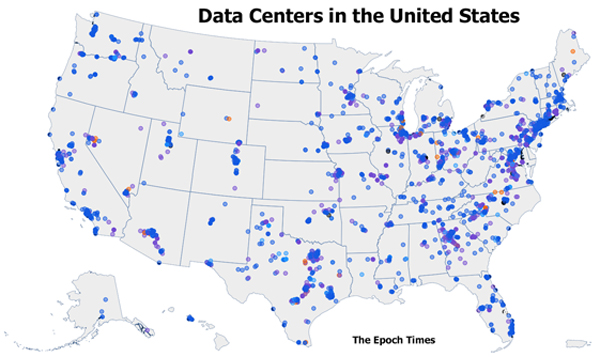
Right now, the answer is not obvious. In fact, across eastern Oklahoma, the emerging pattern should make taxpayers uneasy. Local governments are repeatedly offering long-term property tax abatements, often lasting 25 years, and in some cases exempting 100 percent of new property taxes that otherwise would go to schools, counties, health departments, libraries, technology centers, and other local taxing jurisdictions.
That does not automatically make every deal bad. A well-designed incentive can make sense when it attracts investment that would not otherwise occur, when the public costs are clearly identified, and when the company pays enough in lieu of taxes, infrastructure payments, utility charges, and community benefits to leave residents better off.
But that is the standard public officials should have to meet. Too often, the burden of proof seems to run in the other direction. The assumption appears to be that because the investment number is large, the incentive must be justified.
That is not economic development. That is negotiating from fear.
Data centers are capital-intensive projects. They can involve billions of dollars of private spending, but they often produce relatively few permanent jobs compared with factories, headquarters, or advanced manufacturing facilities. They also require major electric capacity, transmission and distribution planning, substations, land-use coordination, roads, water analysis, emergency-service planning, and long-term monitoring. Those costs may not always show up directly in a city or county budget on day one, but they are real public concerns.
This is why the size and duration of the incentives matter. A five-year abatement is one thing. A 25-year exemption is something else entirely. When a local government exempts most or all property taxes for a quarter century, it is making a generational decision. A child entering kindergarten when the agreement begins could graduate college before the exemption expires.
That sort of deal should not be rushed, obscured by project code names, or justified primarily with consultant language about competitiveness. It should be evaluated with a simple public-interest test: What is the company receiving, what is the public giving up, and what guarantees does the public get in return?
A good agreement would answer several questions plainly.
First, would the project really not happen without the incentive? Public officials often say yes, but the public rarely sees a serious analysis. If Oklahoma already has the land, power, fiber, geography, and business climate that make it attractive, then taxpayers should not have to buy the project twice.
Second, are the payments in lieu of taxes large enough? A PILOT payment sounds attractive, but the right comparison is not zero. The right comparison is what the project would owe under the normal tax system. If a company receives a 100 percent property tax exemption and pays a negotiated annual amount instead, residents deserve to know how that negotiated amount compares with full freight.
Third, are schools and local services protected? Property taxes are not abstract. They fund real institutions. When public officials exempt property from taxation, they are not only helping a company. They are reallocating revenue away from the normal public finance system. If the agreement is good, officials should be able to show that schools, technology centers, counties, libraries, health departments, and fire districts are not being shortchanged.

Fourth, who pays for electric infrastructure? Data centers are unusually large power users. If they pay the full cost of generation, transmission, distribution, substations, and grid upgrades attributable to their load, then the project may be fair to existing customers. If costs are shifted into the broader rate base, then residents and small businesses may end up subsidizing the deal through utility bills rather than taxes.
Fifth, what happens if the project changes? Many agreements are signed before the final end user, final site plan, final load profile, final water demand, or final employment levels are fully clear to the public. That creates risk. A strong public agreement should include clawbacks, transparency requirements, assignment restrictions, job and investment benchmarks, infrastructure-cost protections, and public reporting.
None of this is anti-data center. It is pro-taxpayer, pro-school, pro-local government, and pro-good economic development.
The strongest argument for data centers is that Oklahoma can become a major hub for digital infrastructure. But if that is true, then Oklahoma has bargaining power. We should use it.
Public officials should stop acting as if every project requires the maximum possible incentive. If multiple data centers want to locate in eastern Oklahoma, that is evidence that the region is attractive. It is not evidence that taxpayers must provide 25-year abatements as a matter of course.
A better approach would be simple: standardize the rules, publish the full fiscal analysis, require companies to pay all project-specific utility and infrastructure costs, cap the duration of abatements, make PILOT formulas transparent, and include automatic clawbacks if promised investment, jobs, or community payments do not materialize.
Oklahoma should welcome data centers that pay their own way. It should not turn local governments into bidders in a race to give away the tax base.
The goal should not be to stop growth. The goal should be to make growth pay for itself. That is the deal public officials should be negotiating.
About the author: Eric Olson, Ph.D., hold the Mervin Bovaird Foundation Endowed Professorship in Business, Associate Professor of Finance, Collins College of Business, The University of Tulsa and may be reached by email: Eric-olson@utulsa.edu.