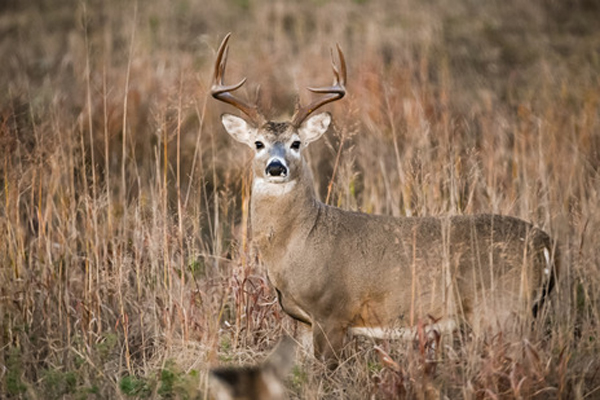
Oklahoma autumn deer behavior combined with peak traveling times for motorists are increasing the risk for vehicle-deer collisions. Drivers should be especially alert.
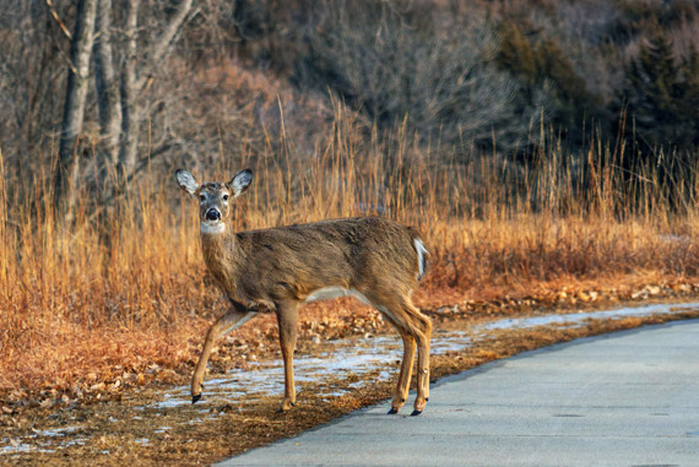
“From mid-October and through November, Oklahoma bucks become more active chasing does during the rut (breeding season), and that creates more instances of fast-moving, unpredictable deer running across highways,” said Micah Holmes, communication and education chief with the Oklahoma Department of Wildlife Conservation.
“Drivers who see a deer cross the road in front of them should be aware that a buck may be running right behind and jump into the road without warning.”
Also, the shift away from Daylight Saving Time on Nov. 1 will place more people behind the wheel during the dawn and dusk periods, which are when deer tend to be most active.
A few tips to increase driving safety during this period are to reduce speed, increase following distance from other cars, and visually scan from ditch to ditch, especially during low-light periods and where brush or trees closely approach the road.
Drivers are urged not to swerve to avoid a deer, because leaving your driving lane could cause a collision with another vehicle or a roadside hazard such as a utility pole, tree or culvert. Experts say the best response is to continue straight ahead and brake in a safe manner.
When a deer is killed on the roadway, the driver or anyone else may salvage the animal for its meat, provided they have the proper permissions. Since deer are a regulated game animal, anyone harvesting a deer outside of normal hunting regulations must first obtain approval from law enforcement. Anyone who removes any portion of the meat or the head or antlers of a deer without permission could be charged with illegal possession of wildlife parts.
Always call a local game warden or other law enforcement officer to ask about salvaging the animal.