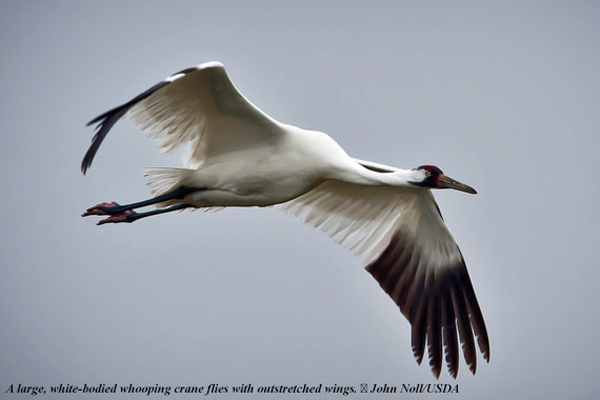
Whooping Cranes are migrating through the Central Flyway and stopping over in Oklahoma before continuing to coastal Texas. Sportsmen, bird watchers, and other outdoor enthusiasts can join the Wildlife Department in documenting this federally endangered bird’s route by sharing photographs and sighting details at wildlifedepartment.com.
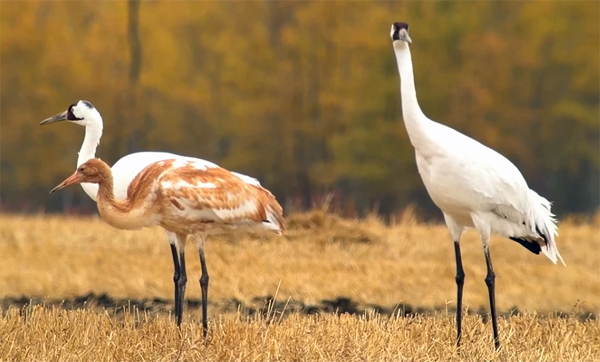
The 2,500-mile journey from nesting grounds in Canada to wintering grounds in Texas can take nearly two months. Along the way, the birds may touch down in wetlands or grain fields to rest and refuel. In Oklahoma, Whooping Cranes are most often reported east of Guymon and west of Interstate 35. Regular stopovers include public lands like Salt Plains National Wildlife Refuge, near Jet, Tom Steed Reservoir, near Snyder, and Hackberry Flat WMA, near Frederick.
The small flocks of cranes that migrate through the Great Plains are part of the Aransas-Wood Buffalo population, the only remaining naturally occurring whooping crane population. Annual surveys are typically conducted on the wintering ground; last year’s count on and around Texas’s Aransas National Wildlife Refuge documented 540 whooping cranes, including at least 57 juvenile birds.
Though down slightly from the 2024-2025 record count of 557 birds, the population varies year-over-year, and the difference is within the survey’s margin of error. Additionally, more than 50 cranes were documented outside of the survey area, including eight birds that overwintered at Salt Plains NWR, a first for Oklahoma.